

We are a professional OEM/ODM manufacturer and supplier of industrial parts in China.
2026 CNC Machining Industry Outlook: AI, Automation and 5-Axis Manufacturing Reshape Global Production
Update time :2026-10-23
Explore the latest CNC machining industry trends in 2026, including AI-powered manufacturing, 5-axis machining, smart factories, digital twins, and automation technologies transforming global precision manufacturing.
The CNC Machining Industry Enters a New Era
The global CNC machining industry is experiencing one of its most significant transformations in decades. As manufacturers face increasing pressure to improve efficiency, reduce lead times, and maintain tighter tolerances, new technologies such as Artificial Intelligence (AI), digital twins, smart automation, and advanced 5-axis machining are rapidly becoming industry standards.
Across automotive, aerospace, robotics, medical devices, and industrial equipment sectors, buyers are demanding more complex components, shorter development cycles, and greater supply chain reliability. These changes are reshaping how precision parts are designed, manufactured, and delivered worldwide.
AI-Powered CNC Machining Becomes Mainstream
One of the most notable trends in 2026 is the integration of AI into CNC machining operations.
Modern CNC systems can now analyze real-time data from sensors and automatically optimize cutting parameters, feed rates, spindle speeds, and tool paths. This helps manufacturers reduce scrap, improve surface finish quality, and extend tool life. According to industry reports, AI-assisted machining is significantly reducing production interruptions while improving consistency across large production runs.
For manufacturers, this means:
-
Higher machining accuracy
-
Lower production costs
-
Reduced machine downtime
-
Faster project turnaround
5-Axis Machining Continues to Expand
As component geometries become increasingly complex, 5-axis CNC machining is seeing strong global growth.
Unlike traditional 3-axis machining, 5-axis technology allows manufacturers to process multiple surfaces in a single setup. This reduces repositioning errors, improves dimensional accuracy, and shortens production time. Industries such as aerospace, motorsports, electric vehicles, and high-performance automotive engineering are driving demand for advanced multi-axis machining capabilities.
Applications include:
-
Intake manifolds
-
Turbocharger components
-
Wheel hubs
-
Aerospace structural parts
-
Medical implants
-
Robotics components
Industry analysts forecast continued growth in the global 5-axis machining market as manufacturers seek higher productivity and greater flexibility.
Smart Factories and Lights-Out Manufacturing
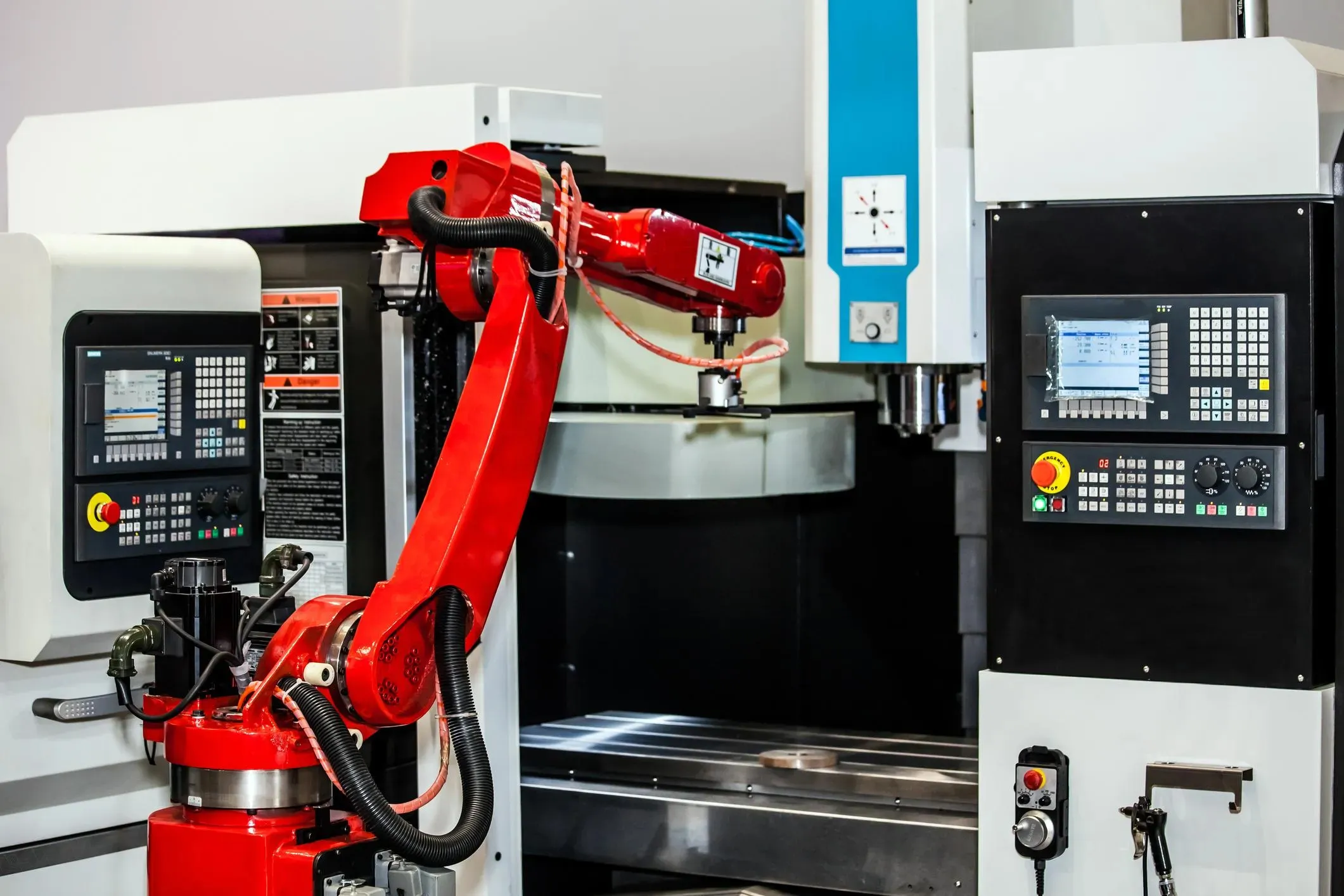
Automation is no longer limited to robotic loading systems.
Modern CNC workshops are increasingly implementing:
-
Robotic material handling
-
Automated pallet systems
-
Real-time production monitoring
-
In-process inspection
-
Predictive maintenance
The concept of "Lights-Out Manufacturing" — where machines operate continuously with minimal human intervention — is becoming more achievable through integrated automation and intelligent production management systems.
For customers, these technologies translate into:
-
Faster lead times
-
Stable quality control
-
Improved on-time delivery
-
Better production scalability
Digital Twins Accelerate Product Development
Digital twin technology is rapidly changing the way manufacturers develop and validate products.
By creating virtual simulations of machining processes before production begins, manufacturers can identify potential issues, optimize tool paths, and verify machining strategies before any material is cut. This reduces costly errors and accelerates the transition from prototype to mass production.
For OEM and product development customers, digital manufacturing tools help:
-
Reduce engineering risks
-
Improve first-pass success rates
-
Shorten development cycles
-
Lower overall project costs
Sustainability Becomes a Competitive Advantage
Environmental responsibility is becoming an important factor in supplier selection.
Manufacturers are increasingly adopting:
-
Minimum Quantity Lubrication (MQL)
-
Coolant recycling systems
-
Energy-efficient machine tools
-
Material recycling programs
Many global OEMs now evaluate suppliers not only on quality and cost, but also on sustainability performance and operational efficiency.
What This Means for Global Buyers
As the CNC machining industry evolves, buyers are prioritizing suppliers that offer more than manufacturing capacity.
The most competitive suppliers today provide:
✓ Engineering support
✓ DFM optimization
✓ Rapid prototyping
✓ 3/4/5-axis machining capabilities
✓ Integrated quality control
✓ Flexible production scaling
✓ Fast response and reliable delivery
Manufacturers that combine advanced technology with strong engineering expertise are better positioned to support product innovation and long-term supply chain stability.
Explore the latest CNC machining industry trends in 2026, including AI-powered manufacturing, 5-axis machining, smart factories, digital twins, and automation technologies transforming global precision manufacturing.
The CNC Machining Industry Enters a New Era
The global CNC machining industry is experiencing one of its most significant transformations in decades. As manufacturers face increasing pressure to improve efficiency, reduce lead times, and maintain tighter tolerances, new technologies such as Artificial Intelligence (AI), digital twins, smart automation, and advanced 5-axis machining are rapidly becoming industry standards.
Across automotive, aerospace, robotics, medical devices, and industrial equipment sectors, buyers are demanding more complex components, shorter development cycles, and greater supply chain reliability. These changes are reshaping how precision parts are designed, manufactured, and delivered worldwide.
AI-Powered CNC Machining Becomes Mainstream
One of the most notable trends in 2026 is the integration of AI into CNC machining operations.
Modern CNC systems can now analyze real-time data from sensors and automatically optimize cutting parameters, feed rates, spindle speeds, and tool paths. This helps manufacturers reduce scrap, improve surface finish quality, and extend tool life. According to industry reports, AI-assisted machining is significantly reducing production interruptions while improving consistency across large production runs.
For manufacturers, this means:
-
Higher machining accuracy
-
Lower production costs
-
Reduced machine downtime
-
Faster project turnaround
5-Axis Machining Continues to Expand
As component geometries become increasingly complex, 5-axis CNC machining is seeing strong global growth.
Unlike traditional 3-axis machining, 5-axis technology allows manufacturers to process multiple surfaces in a single setup. This reduces repositioning errors, improves dimensional accuracy, and shortens production time. Industries such as aerospace, motorsports, electric vehicles, and high-performance automotive engineering are driving demand for advanced multi-axis machining capabilities.
Applications include:
-
Intake manifolds
-
Turbocharger components
-
Wheel hubs
-
Aerospace structural parts
-
Medical implants
-
Robotics components
Industry analysts forecast continued growth in the global 5-axis machining market as manufacturers seek higher productivity and greater flexibility.
Smart Factories and Lights-Out Manufacturing
Automation is no longer limited to robotic loading systems.
Modern CNC workshops are increasingly implementing:
-
Robotic material handling
-
Automated pallet systems
-
Real-time production monitoring
-
In-process inspection
-
Predictive maintenance
The concept of "Lights-Out Manufacturing" — where machines operate continuously with minimal human intervention — is becoming more achievable through integrated automation and intelligent production management systems.
For customers, these technologies translate into:
-
Faster lead times
-
Stable quality control
-
Improved on-time delivery
-
Better production scalability
Digital Twins Accelerate Product Development
Digital twin technology is rapidly changing the way manufacturers develop and validate products.
By creating virtual simulations of machining processes before production begins, manufacturers can identify potential issues, optimize tool paths, and verify machining strategies before any material is cut. This reduces costly errors and accelerates the transition from prototype to mass production.
For OEM and product development customers, digital manufacturing tools help:
-
Reduce engineering risks
-
Improve first-pass success rates
-
Shorten development cycles
-
Lower overall project costs
Sustainability Becomes a Competitive Advantage
Environmental responsibility is becoming an important factor in supplier selection.
Manufacturers are increasingly adopting:
-
Minimum Quantity Lubrication (MQL)
-
Coolant recycling systems
-
Energy-efficient machine tools
-
Material recycling programs
Many global OEMs now evaluate suppliers not only on quality and cost, but also on sustainability performance and operational efficiency.
What This Means for Global Buyers
As the CNC machining industry evolves, buyers are prioritizing suppliers that offer more than manufacturing capacity.
The most competitive suppliers today provide:
✓ Engineering support
✓ DFM optimization
✓ Rapid prototyping
✓ 3/4/5-axis machining capabilities
✓ Integrated quality control
✓ Flexible production scaling
✓ Fast response and reliable delivery
Manufacturers that combine advanced technology with strong engineering expertise are better positioned to support product innovation and long-term supply chain stability.
<< Previous: NO MORE
Copyright © 2026 Ningbo Yinzhou Relong Auto-parts Co., Ltd.